
 buy
420 000 DT
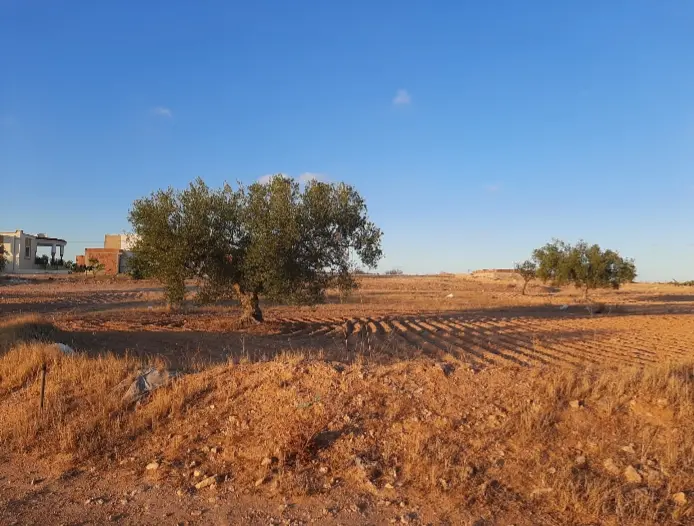
أرض فلاحية مجهزة بالكامل ومزروعة بأشجار زيتون عالية الجودة صفاقس
El Mahrouka, Sfax
7500 m²
buy420 000 DT
El Mahrouka, Sfax
 buy
 buy
 buy
Browse other popular searches in one click.
Some twenty kilometres west of Sfax, Agareb lives off the olive tree. Around the town stretch the neatly aligned plantations typical of the Sfax region, on light, sandy soils, with widely spaced trees to make the most of the little rain. Land remains the families' main asset, and it accounts for most of the property listings in the delegation: a plot of land for sale in Agareb is usually a parcel of olive trees, sometimes a building plot on the edge of town.
What is on offer online is modest, a few listings at a time, almost all posted by owners or heirs. Many sales still happen through connections, at the café or via the village oil merchant. To compare with Mahrès, Bir Ali Ben Khelifa or the inner suburbs of Sfax, all the land and farms for sale in the Sfax governorate are gathered on a single page, with direct contact with each seller.
The rural sectors of the delegation, Bouledhieb, El Mahrouka, Essoghar or Ettorba, hold most of the farmland. Planted parcels are sold there, from a few hundred trees to several hectares, often rain-fed, meaning without irrigation. The price depends on the age and condition of the olive trees, the planting density, the quality of access by dirt track or tarmac road, and whether there is a well.
An olive grove for sale near Agareb appeals to two kinds of buyer: the farmer expanding his holding, and the Sfax town dweller, or the emigrant, who wants his own land for the family harvest and a shelter for the summer. For the latter, closeness to Sfax and easy access matter more than yield.
In this region, water decides everything. Farmland for sale in Agareb with a working, authorised and productive well is worth considerably more than a dry parcel. Ask about the depth of the well, its flow in summer, the water quality, often salty in the Sfax region, and above all the authorisation issued by the agricultural administration. An unauthorised borehole can be closed and is not passed on without trouble.
For a parcel without water, find out about connecting to the rural network or about existing storage tanks. Visit at the end of summer if you can, when the drought reveals the real condition of the trees.
Buying farmland to build a house on it is the most frequent mistake. A parcel's agricultural designation cannot be changed by a simple request, and building on it is strictly limited. If your project is residential, look for a plot within the development boundary of the Agareb municipality, and ask the municipality for a zoning certificate before signing.
As for ownership, many olive groves have been passed down through several generations and remain in joint ownership. Insist on the land title where there is one, the full list of heirs and their written consent. For unregistered land, have the deeds and the boundary markers checked by a surveyor, and call on a lawyer or a notary.
On the edge of town, a few private subdivisions and divided-up family parcels offer building plots, with more or less developed access. Before buying, check the road, electricity and drinking water at the plot itself. Farmland sales are often concluded after the olive harvest, at the end of winter, when families do their accounts, or in summer, when emigrants come home. If you would rather settle in Agareb without buying, the rentals in Agareb give an idea of the local market.