
 buy
Land and farms for sale in Sakiet Sidi Youssef
1 listing found
buyBrowse more property listings in the same area
Browse other popular searches in one click.
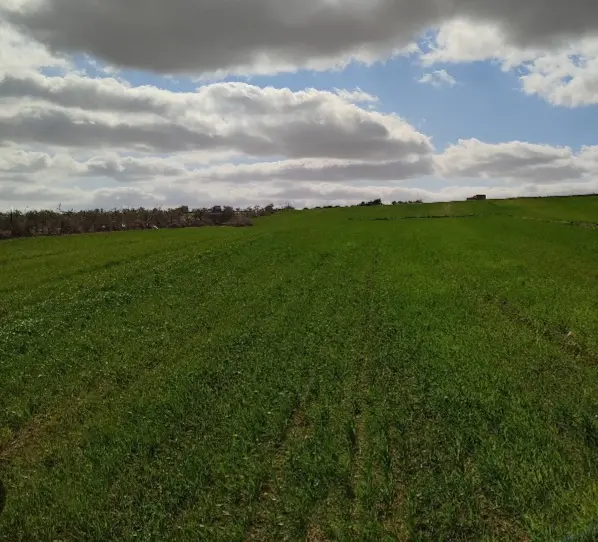
Sakiet Sidi Youssef is the delegation of the Le Kef governorate that borders Algeria. The name first brings to mind the bombing of February 1958, an episode that lastingly binds the history of Tunisia to that of Algeria and is commemorated every year. In daily life, it is a small High Tell town surrounded by hills, wheat and barley fields, pastures and woods, where farming and livestock remain the main activities.
Land for sale in Sakiet Sidi Youssef is therefore mostly cropland or a farm, more rarely an urban plot. Listings come almost entirely from private sellers and the offer is limited depending on the week: it is a market of families and neighbours, where a plot is often sold before it is even advertised. To widen the search to Le Kef, Nebeur or Tajerouine, browse all the land and farms for sale in the Le Kef governorate, then call the advertiser directly.
Ain El Karma and the delegation's countryside
Ain El Karma is one of the rural sectors where listings appear. The land in the Ain El Karma sector consists mainly of agricultural plots with scattered housing: a stone or breeze-block house, a cowshed, a few olive or fig trees near the house and fields all around. Closer to town, plots are smaller and aimed at building a house.
The terrain shapes the market. Valley-floor land, deep and easy to plough, is the most sought after for cereals. Sloping, stonier plots suit grazing, olive or almond trees. A farm for sale in Sakiet Sidi Youssef often brings the two together, making it possible to combine crops with sheep or cattle farming.
What matters in the High Tell
The Le Kef region gets more rain than the Centre and the South, which allows rain-fed cereal farming over large areas. Winter is cold, sometimes with snow on the heights, and rural tracks become difficult after heavy rain. Before buying, make the trip in winter: land that is accessible in July can be cut off in January.
Water remains an asset, even here. A spring, a well or a connection to the rural water network adds value, especially for livestock. STEG electricity reaching the farm is another point to check, as running a line over several hundred metres is expensive. If the plot is wooded or borders a forest, check with the forestry services: clearing and felling are regulated and some of the woodland belongs to the state forest domain.
Papers, heirs and boundaries
The land title is the first thing to ask for. Much of the land in the delegation has been held for several generations, sometimes unregistered, often in joint ownership. Check at the land registry the names of all registered owners and the absence of charges, and obtain the written consent of every heir, including those living in Tunis or abroad.
Have the plot marked out by a surveyor: on sloping land, boundaries follow low walls, hedges or gullies that shift over time. Remember too that farmland is not buildable by default, and that ownership of farmland is reserved for Tunisians.
When to search, how to negotiate
Land sells mostly after the harvest, in summer, when families and emigrants get together and settle estates. It is also the time when you can see the state of the crops. For a livestock farm, visit at the end of winter, when the pastures and shelters show their limits. Be wary of advances paid on a mere verbal promise, a practice still common between neighbours. Take your time, compare with neighbouring delegations, and have the deed drawn up by a notary in Le Kef, then registered.