
 buy
buyLand and farms for sale in Ghanouch
1 listing found
buyBrowse more property listings in the same area
Browse other popular searches in one click.
Ghanouch borders Gabes to the north, between the Sfax road and the sea. For many Tunisians, the name first brings to mind the chemical complex and the commercial port on its coast, and the debates over pollution of the gulf that have gone with them for decades. But Ghanouch is also a town in its own right, with its coastal oasis, its gardens of palms and pomegranate trees, and residential neighbourhoods that spread as Gabes runs out of room.
Land for sale in Ghanouch therefore interests two groups: families who want to build a house a few minutes from the centre of Gabes, and those looking for an oasis parcel to farm or keep in the family. The supply online is limited and varies from week to week, published mainly by private sellers you call directly. The land and farms for sale in Gabes governorate let you widen the search to Mareth, El Hamma or Metouia.
Building plots on the edge of Gabes
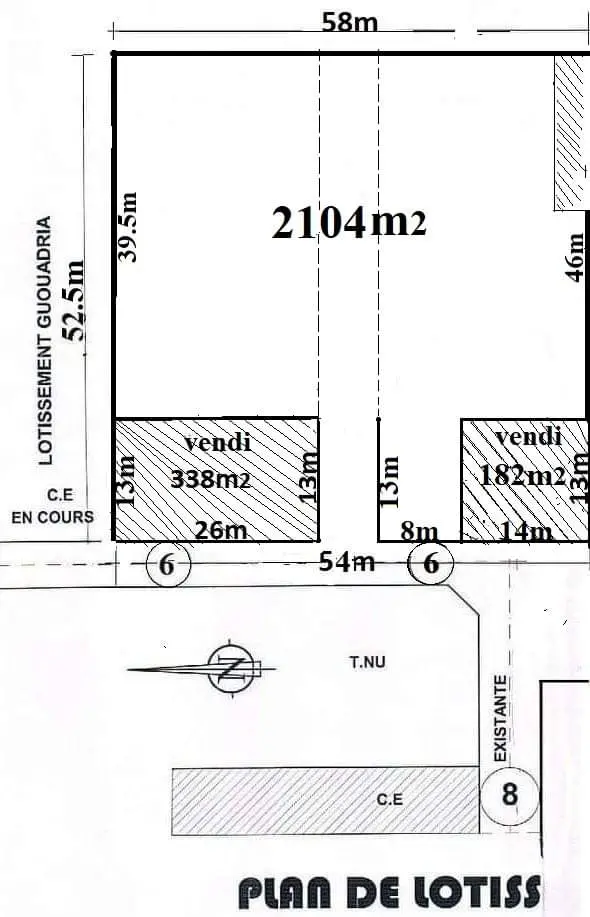
The strongest demand is for building plots. Gabes stretches along the coast and its oasis, and households looking for a plot of land in Ghanouch often find more space here than in town for a lower price. Recent housing estates offer plots of a few hundred square metres, with roads laid out and services nearby; isolated plots, larger, call for more checks.
A building plot in Ghanouch must appear in the municipality's development plan or in an authorised housing estate. Ask for the planning certificate, or at the very least check with the municipality on the plot's designated use and the permitted height. Closeness to the industrial zone matters too: when the prevailing wind is unfavourable, smells and emissions weigh on daily life, and a plot away from the industrial coastline logically sells better. The listings on the Ghanouch Sud land page give a first benchmark by sector.
Oasis parcels: a property apart
The oasis of Gabes, and that of Ghanouch which extends it, has a rare feature: it borders the sea. Crops are grown in layers, palms on top, fruit trees such as pomegranates in the middle, vegetables and fodder on the ground. Parcels are small, often from a few hundred square metres to a hectare, and have been handed down in families for generations.
Buying an oasis parcel means buying a right to water as much as a piece of ground. Irrigation depends on water turns organised by farmers' associations, fed by boreholes; falling water tables have reduced the frequency of these turns in several areas. Ask the seller how many times the parcel gets water in summer, and talk to the neighbours. An oasis parcel also remains farmland: it cannot be built on, and any listing suggesting otherwise calls for caution.
Title, joint ownership and negotiation
In the oasis as in the older neighbourhoods, joint ownership is common: several brothers and sisters, sometimes living abroad, own the same parcel together. All must sign. Check whether the land is registered, ask for the list of owners, and hand the deeds to a notary or lawyer in Gabes before any payment.
The market follows the summer returns, when emigrant families decide to sell or build. Outside that period, local buyers have more room to manoeuvre. Always compare with two or three neighbouring plots, and bring in a surveyor to mark out the parcel: on the edge of town, the boundaries between inherited plots are often approximate.
Think too about the end use. A plot intended for a main home is judged on the school, the road and the services; an oasis parcel intended for a family vegetable garden is judged on the water and the state of the palms. Land for sale in Gabes can tick one box or the other, rarely both, and the right price depends on which box matters to you.