
 buy
Land and farms for sale in Tataouine Sud
1 listing found
buyBrowse more property listings in the same area
Browse other popular searches in one click.
- Property listings in Bir Thalathine
- Property listings in Ras El Ouedi
- Homes in El Maztouria Sud
- Properties in El Maztouria Nord
- Properties in Beni Barka - Tounket
- Find property in Eddouiret
- Real estate listings in Erroghba
- Properties in Gharghar
- Find property in El Mesreb
- Real estate in Cité El Barr
- Find property in Tataouine Supérieure
- Property listings in Ksar El Moukabala
- Real estate market in Tataouine Ville
- Housing in Nouvelle Chnini
- Properties in Chenini
Many of those who type "house for sale tataouine" end up buying a plot of land. In southern Tunisia, a house is built more than it is bought: you acquire a plot, pour the slab when the money comes in, add a room the following summer. The delegation of Tataouine Sud, which covers the southern half of the main town and a vast hinterland of plateaus, dry valleys and mountains, follows this logic: building plots sit alongside very particular farmland, shaped by centuries of adaptation to drought.
Listings are few, posted by private owners, and the supply varies from week to week. To widen the search to Tataouine Nord, Ghomrassen or Bir Lahmar, all the land and farms for sale in the Tataouine governorate bring together the other offers in the region.
Building plots in the south of town
The main town has grown in every direction, driven by public sector salaries, activity linked to oil and the border, and above all money from emigrants. In the south, new neighbourhoods of detached houses have been added to the older ones, on plots of a few hundred square metres. The typical buyer is a town family wanting to stop renting, or an emigrant settled in France, Tunis or Libya who is preparing his return and buys remotely through a brother or a cousin.
A plot in an approved subdivision, with a laid-out street and water and electricity networks nearby, sells for more but can be built on quickly. A parcel on the edge of town costs less, at the price of an often lengthy connection and a less certain permit.
Jessour, olive trees and grazing land: farmland in the south
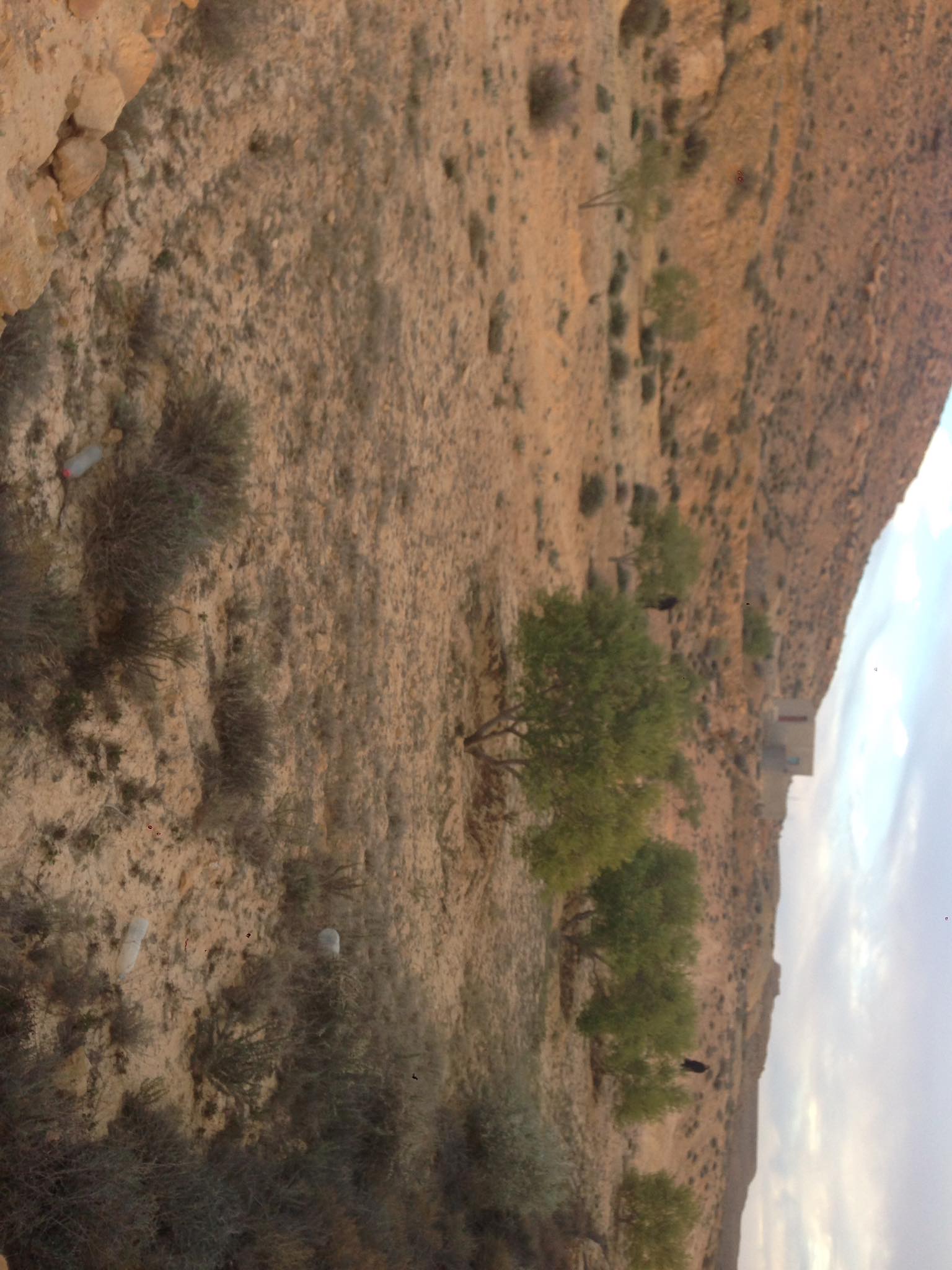
Outside town, farmland looks like nowhere else. In the valleys and at the foot of the hills, the jessour, small dams of earth and stone built across the wadis, hold back the water and silt of the rare rains. Behind each dyke, a few olive, fig, almond or palm trees benefit from soil built up over generations. A well-kept jessour parcel is a family heritage rarely given up, and its price depends on the condition of the dyke as much as on the number of trees.
Grazing land, more extensive, is used for flocks of sheep, goats and sometimes dromedaries. It is rarely sold, and almost always between members of the same family or village. The Erroghba sector has its own page: the land for sale in Erroghba groups the listings for this area.
Land status comes first
In the Tataouine governorate, much of the land has historically been collective land, managed by management councils and gradually allocated to families. This privatisation is proceeding in stages, and not all parcels have the same status. Land with a land title or a regularised allocation deed can be sold, built on and financed normally. Land whose status has not been settled is sold between relatives, at a reduced price, without real guarantees for the buyer.
So ask for the deed of ownership or allocation, have it checked by a notary in town, and check the boundary markers on site. Undivided estates are common: every heir must sign, even those who live far away.
Water, access and the selling season
Water is scarce and expensive. For an agricultural parcel, ask whether there is an authorised well, a cistern or a possible connection; for a building plot, check the distance to the SONEDE network. Access matters too: a track that a flooding wadi cuts off two days a year can isolate a farm.
As with housing, the market lives to the rhythm of summer returns. Sellers wait for July and August to meet emigrant buyers; in autumn, those who have not sold become more open to negotiation. On Houni, you call the owner directly: ask about the surface area, the land status and access to water from the first exchange.